Warm, creamy, colorful, and wonderfully comforting, this Red Lentil Dal with Sweet Potato is an easy Ayurvedic-inspired meal packed with plant-based protein, fiber, and nourishing vegetables. Red lentils cook relatively quickly and combine beautifully with sweet potatoes, tomatoes, peppers, and coconut milk to create a rich and satisfying dish that’s perfect for a cozy dinner.
The combination of red lentils and sweet potato gives this dal a naturally creamy texture and gentle sweetness, while ginger, garlic, garam masala, and fresh herbs add warmth and depth. Coconut milk brings everything together with a smooth, velvety consistency and makes this dish especially enjoyable when served with fluffy rice or millet.
This Red Lentil Dal with Sweet Potato is also wonderfully versatile. You can prepare it as a hearty one-pot meal or serve it alongside your favorite grain for a more substantial dinner. Rice makes an excellent choice for Vata, while millet can be especially suitable for Pitta and Kapha according to Ayurvedic principles.
Why You’ll Love This Red Lentil Dal with Sweet Potato
This Red Lentil Dal is the kind of meal that feels nourishing without being complicated. It’s made with accessible ingredients, requires only one main cooking pot, and can be prepared ahead of time for an easy lunch or dinner during the week.
Red lentils provide plant-based protein and dietary fiber, while sweet potatoes, tomatoes, carrots, and red peppers add color, flavor, and a variety of nutrients. The creamy coconut milk makes the dish satisfying and brings a naturally rich texture without needing heavy dairy ingredients.
The spices also make this recipe particularly flavorful. Fresh ginger, garlic, and garam masala transform a simple combination of lentils and vegetables into an aromatic meal that fills the kitchen with warmth.
Red Lentils: A Nourishing Ayurvedic Legume
Red lentils are especially popular in Ayurvedic cooking because they are relatively light and easy to prepare compared with many other legumes. They have a naturally soft texture when cooked and can be transformed into a creamy dal without extensive cooking.
From an Ayurvedic perspective, red lentils are traditionally described as sweet and astringent, as well as cooling, light, and soft. This combination is considered balancing for all three doshas when prepared appropriately.
Their astringent and drying qualities may be less suitable for Vata when eaten alone, but cooking them with nourishing fats and warming digestive spices such as ginger and garam masala can create a more balanced meal.
Red lentils are also traditionally regarded as Sattvic, meaning they are associated in Ayurvedic philosophy with calmness, clarity, and a peaceful state of mind. They have long been valued as a nourishing and strengthening food.
Soaking red lentils is optional because they generally cook much faster than brown, green, or black lentils. However, soaking them for an hour or overnight can help soften the legumes and may reduce some of their naturally occurring phytic acid. If you’re short on time, simply rinse the lentils thoroughly and cook them directly.
The Benefits of Coconut Milk
Coconut milk gives this dal its wonderfully creamy consistency while adding richness and a naturally mild sweetness.
From an Ayurvedic perspective, coconut is particularly valued for Pitta because of its naturally cooling and nourishing qualities. It can be especially pleasant in recipes designed for warmer weather or for balancing excess heat.
For Vata, coconut milk can provide hydration and nourishment, but it is best enjoyed warm and combined with digestive spices such as ginger or cinnamon. This can make the meal feel more grounding and comfortable to digest.
Kapha types may find coconut milk somewhat heavy because of its rich and oily qualities. Using a lighter coconut milk or diluting it with additional vegetable broth can make the dish easier and lighter while preserving its creamy character. You can also replace some or all of the coconut milk with vegetable broth or water for a lighter version.
Millet as a Side Dish
Although rice makes a wonderful accompaniment to dal, millet is another excellent option and adds its own nutritional qualities.
Millet is naturally gluten-free and provides minerals such as iron, calcium, and zinc, along with various vitamins and plant compounds. Different varieties of millet also contain phytochemicals such as flavonoids and phenolic compounds that have antioxidant properties.
Traditionally, millet has been used in Indian and Chinese food traditions for its nourishing qualities. Its nutrient profile makes it a useful addition to a varied, balanced diet.
Millet also contains amino acids such as cysteine and methionine, which are involved in the production of keratin, an important structural protein in hair. It also provides nutrients such as iron that contribute to normal oxygen transport and overall nutritional health.
For anyone looking for a gluten-free alternative to rice or wheat-based grains, millet is an easy grain to incorporate into everyday meals.
How to Serve Red Lentil Dal with Sweet Potato
This Red Lentil Dal with Sweet Potato is delicious served over freshly cooked rice or millet, allowing the grain to soak up the creamy coconut sauce.
For a complete meal, serve it with a fresh cucumber salad, steamed vegetables, or lightly dressed leafy greens. Fresh herbs such as coriander, dill, basil, or mint add brightness and contrast to the warm spices.
You can also finish each bowl with a drizzle of coconut milk, a squeeze of lemon juice, or a sprinkle of toasted seeds.
The recipe is suitable for a vegan diet when coconut oil is used instead of ghee. Leftovers can be stored in the refrigerator and reheated gently. If the dal thickens during storage, add a little water or vegetable broth while reheating. It can also be frozen in an airtight, freezer-safe container and thawed in the refrigerator before reheating.
Ayurvedic Dosha Recommendations
Vata
This is generally a balancing recipe for Vata, especially when served warm. Rice is the preferred side dish because millet has naturally dry and cooling qualities that may be less grounding for Vata.
Use enough ghee or coconut oil and keep the ginger and warming spices in the recipe. Serving the dal warm and creamy can make it particularly comforting for Vata.
Pitta
Pitta can enjoy this recipe with a few adjustments. Reduce the amount of hot spices and garlic if needed, and garnish with fresh mint or basil.
Millet is an excellent side dish for Pitta according to Ayurvedic principles, as its cooling qualities can complement a Pitta-balancing meal.
Kapha
For Kapha, use a lighter coconut milk or dilute regular coconut milk with additional vegetable broth. This keeps the dish lighter while maintaining its creamy consistency.
Millet is a good choice instead of rice for Kapha because it is generally considered lighter and drier. You can also emphasize warming spices such as ginger, cumin, coriander, and black pepper.
Tips for the Best Dal
Rinse the red lentils well before cooking to remove excess starch and any debris. When sautéing the onion, garlic, ginger, and spices, add a little water if necessary to prevent them from sticking or burning.
Don’t worry if the dal looks somewhat thin while it is cooking. The lentils and sweet potatoes will continue to absorb liquid as they simmer, and the mixture will become thicker and creamier as it cooks.
For an especially smooth dal, you can lightly mash the sweet potatoes and lentils against the side of the pot once they are tender. If you prefer more texture, simply leave the vegetables in larger pieces.
Check out all our recipes in the compendium here. You can also check our YouTube channel for recipe videos.
Don’t forget to rate this Red Lentil Dal with Sweet Potato and leave your thoughts in the comments!
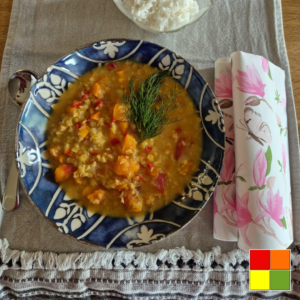
Red Lentil Dal with Sweet Potato
Ingredients
- 200 g red lentils
- 200 g sweet potatoes
- 250 g fresh tomatoes
- 100 g carrots
- 150 g red bell pepper
- 100 g onion
- 250 ml coconut milk
- 500 ml vegetable broth or water
- 2 tbsp ghee or coconut oil
- 1 piece fresh ginger
- Fresh basil leaves
- Garlic to taste
- Fresh herbs to taste
- Salt to taste
- Garam masala powder to taste
Side Dish
- 200 g cooked rice or millet
- Optional: cinnamon
Instructions
- Soak the red lentils overnight or for about 1 hour before cooking, if desired. This step is optional but may help reduce phytic acid.
- Rinse the lentils well and prepare the vegetables by washing and chopping them into bite-sized pieces.
- Heat the ghee or coconut oil in a large pot over medium heat.
- Add the onion, minced garlic, fresh ginger, and garam masala. Add a splash of water if needed to prevent the spices from burning.
- Add the red lentils, red pepper, tomatoes, and sweet potatoes. Sauté for about 5 minutes.
- Pour in the coconut milk and vegetable broth or water.
- Bring to a gentle simmer, reduce the heat, cover, and cook for approximately 30 minutes, or until the lentils and vegetables are tender.
- Meanwhile, prepare the rice or millet. Add a little cinnamon while cooking for extra flavor, if desired.
- Taste and adjust the seasoning.
- Garnish with fresh dill, coriander, basil, or other fresh herbs and serve warm.
Notes
Check out all our recipes here.