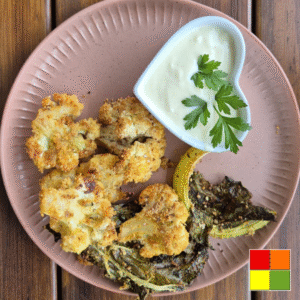
Baked cauliflower with vegan horseradish dip
A vegan, low-carb, easy-to-cook recipe that works beautifully as an appetizer or as a main dish served with rice and lentils.
Ingredients
For cauliflower bites
- 500 g cauliflower with leaves (if fresh and intact)
- 2 tbsp sesame oil (or melted ghee, if not vegan)
- 2 tsp curry powder
- cumin seeds to taste
- salt to taste
- 3 tbsp breadcrumbs (optional, for extra crunch)
For the vegan dip
- 150 g soy yogurt (or other plant-based alternative) (for a non plant-based version, you may use Greek yogurt, cream cheese, or crème fraîche)
- 20 ml sesame oil
- 10 g honey (use maple syrup or agave for a plant-based option)
- 10 g mustard
- 2 tsp grated horseradish
- zest of ½ lemon
- salt to taste
Instructions
- Separate the cauliflower into florets, wash, and drain well. If the leaves are fresh, keep them.
- In a small bowl, mix the sesame oil (or Ghee), curry powder, cumin seeds, and salt.
- Coat the cauliflower pieces (and leaves, if using) thoroughly with the spice mixture.
- For deeper flavor, let marinate for about 20 minutes (optional).
- Place the cauliflower on a baking sheet, sprinkle with breadcrumbs if using, and spread evenly.
- Preheat the oven to 200 °C (390 °F) and bake for about 30 minutes, turning halfway through, until golden brown and crisp.
- Meanwhile, prepare the dip: mix all the dip ingredients in a bowl, taste, and adjust seasoning to preference.
- Serve the baked cauliflower warm with the horseradish dip.
- Take a mindful breath, bless your food, and enjoy!
Video
Notes
The caloric value was calculated per serving.
Reccomendations for Doshas
Vata: Horseradish’s warming and stimulating properties help reduce coldness and dryness, supporting sluggish digestion or congestion.
Pitta: Because horseradish is very heating and pungent, it may aggravate Pitta imbalances if consumed in excess. For a cooling alternative, use fresh mint or basil in the dip.
Kapha: Horseradish’s warming qualities are especially beneficial in winter. They help stimulate digestion, clear heaviness, and reduce congestion — making this dish supportive during cold and flu season.